

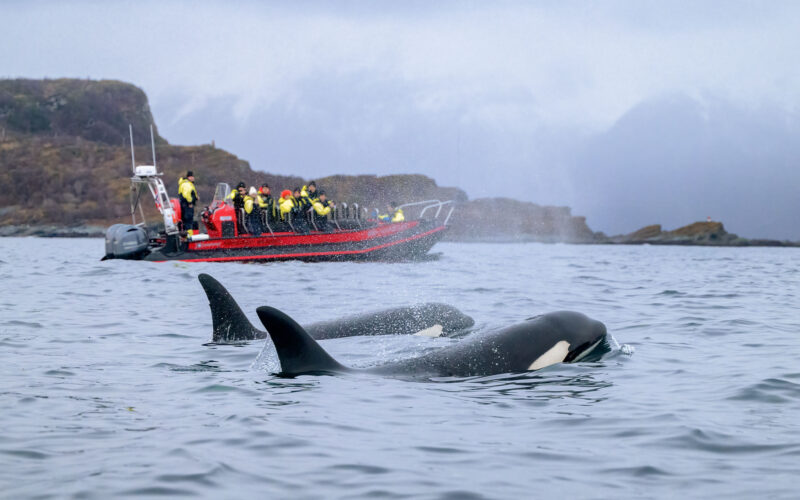
Have you ever wondered what an encounter with the largest member of the dolphin family would feel like? Let us take you on a journey together with Behind the Mask that will send chills down your spine, and not just because of the water temperature!
Video by @BehindtheMask behindthemasktravel with freediver Dada Li
In this breathtaking footage from Behind the Mask you get a small glimpse into what it would feel like to be submerged with these awe-inspiring marine mammals.
When embarking on an exhilarating adventure like this one, in remote icy waters, you want to be sure that you have the best diving coverage out there! Get Covered – Get DiveAssure
Orcas are one of the most iconic and fascinating marine mammals in the world. They are highly intelligent, social, and adaptable creatures, with a complex culture and sophisticated communication skills. In this blog post you will learn more about the orcas of Tromso in Norway as well as learning their general characteristics, hunting behaviors, and more!
Tromso, Norway
In the Norwegian fjords, just North of Tromso lies a special place, so special it is the top location in the world for encountering orcas. The cold water of the fjords is full of herring, and although some orcas have been known to prefer feeding off of sea mammals such as seals or sea lions, or sea birds such as penguins, the orcas around Norway are more than satisfied with a bountiful diet of Atlantic herring.
More Than One Gigantic Encounter
Due to the high numbers of herring, it is the perfect location for humpback whales to bubble-net feed, a form of cooperative feeding used by some pods of humpback whales. The group will circle a school of small fish and use vocalizations to communicate and execute the “bubble net”. This is initiated by one whale, who exhales through its blowhole at the school of fish, more whales join in and circle the prey trapping the fish in a bubble net. The whales will then communicate to simultaneously swim upwards, mouths open to feed on the trapped fish.
Orcas, the True Queens of the Ocean
Orcas, also known as killer whales for their unique hunting behaviors, are apex predators of the ocean and play a huge role in the health of the ocean. Orcas can weigh over 5,400 kg and grow to over 9m in length!
This incredibly smart species hunts together as a pod, coordinating their attack. They have plenty of different hunting techniques, such as cooperative hunting, beaching, and tail slapping, which they pass on down to their young. In some areas they will also develop unique hunting skills that are environment specific such as the “wave washing” technique used by orcas in Patagonia to hunt sea lion pups.
One Big Family
An orca pod usually consists of up to 40 individuals, and is led by a matriarch, typically the oldest and most experienced female of the pod.
Scientists have actually proven that each pod has its own unique dialect and that learned behaviors are passed from one pod generation to the other – a unique feature that is currently known to exist with one other species; humans.
Other Characteristics
Orcas, despite being known as ‘whales’ are, as we mentioned earlier, members of the dolphin family, they have a distinctive black and white coloration that makes them easy to recognize. They have a long, streamlined body, a tall dorsal fin, and a powerful tail that allows them to swim at speeds of up to 56 km/h. Orcas have sharp teeth that can grow up to 10 cm in length, and a highly developed brain that makes them one of the most intelligent animals in the ocean.
Habitat and Distribution
Of course, orcas are not only to be found in Norway, they live throughout all of the world’s oceans, from the Arctic to the Antarctic. They are highly adaptable animals that can thrive in a variety of environments, from shallow coastal waters to deep oceanic habitats. Some populations of orcas are resident, meaning they stay in the same area year-round, while others are migratory and travel long distances to follow their prey.
Orcas Under Threat
Despite their widespread distribution, orcas face a range of threats from human activities, including habitat loss, pollution, and overfishing. Some populations of orcas are also threatened by hunting and capture for captivity, with the captive industry driving demand for live captures of wild orcas. In some areas, such as the Pacific Northwest, the decline of salmon populations has also affected the availability of food for resident orcas. As a result, many conservation organizations are working to protect orcas and their habitat, including efforts to reduce pollution and improve fisheries management.
Orcas are truly remarkable animals that capture the imagination of people all over the world. With their intelligence, social structure, and hunting strategies, they are a key part of the marine ecosystem and a symbol of the power and majesty of the ocean. However, as with many other species, their survival is threatened by human activities, and it is up to all of us to work to protect these amazing creatures and their habitat.
Heading on a diving vacation to Norway? – We’ve Got You Covered – Click Here.
Norway and Sustainability
Norway, and Tromsø in particular, are often considered excellent sustainable ecotourism destinations for several reasons:
1. Natural Beauty and Biodiversity:
Norway boasts stunning landscapes, including fjords, mountains, and coastal areas. Tromsø, situated in the Arctic Circle, offers unique natural phenomena like the Northern Lights (Aurora Borealis) and the Midnight Sun. The region’s diverse ecosystems provide opportunities for observing a wide range of wildlife, including orca, whales, seals, reindeer, and various bird species.
2. Commitment to Sustainable Practices:
Norway places a strong emphasis on environmental conservation and sustainable practices. The country has implemented strict regulations to protect its natural resources and ecosystems. Tromsø, like many other Norwegian destinations, has adopted eco-friendly initiatives in tourism, such as eco-certified accommodations, waste management, and renewable energy sources.
3. Outdoor Activities and Adventure Tourism:
The Norwegian landscape lends itself to a variety of outdoor activities, promoting a low-impact and sustainable form of tourism. Visitors can engage in activities such as hiking, kayaking, and dog sledding, fostering a connection with nature.
Sustainable adventure tourism encourages responsible exploration and a minimal ecological footprint.
4. Responsible Wildlife Watching:
Tromsø is known for responsible wildlife watching, particularly whale watching. Operators adhere to guidelines to minimize disturbance to marine life, contributing to the conservation of these species.
5. Efficient Transportation:
Norway is known for its efficient and environmentally friendly public transportation system. Visitors to Tromsø can use public buses, electric ferries, and other sustainable modes of transportation, reducing the carbon footprint associated with travel. If you need to fly to Norway for your visit, keep in mind, that the longer your stay the less your carbon impact.
6. Green Accommodation Options:
Tromsø offers a range of eco-friendly accommodations, including hotels and cabins with environmentally conscious practices. These may include energy-efficient technologies, waste reduction measures, and a commitment to sustainable sourcing.
In summary, Norway offers a combination of breathtaking natural beauty, a commitment to sustainable practices, and opportunities for responsible and educational tourism, making them appealing destinations for those seeking eco-friendly travel experiences.
An Unforgettable Adventure to be with These Panda’s of the Ocean.
Book the trip of a lifetime with Behind the Mask Travel and discover the most amazing places above and below the water. Orcas, sharks, whales, leopard seals, penguins and so much more!
Are you planning to dive with orcas or go on a diving vacation? We recommend purchasing our specialized diving and travel plans to assure a smooth ride and in the event of something going wrong we’ll be there to see you through, covering your costs along the way.
For our full policy descriptions and more information on joining the DiveAssure Association go to www.diveassure.com