



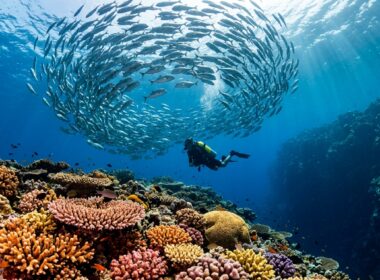
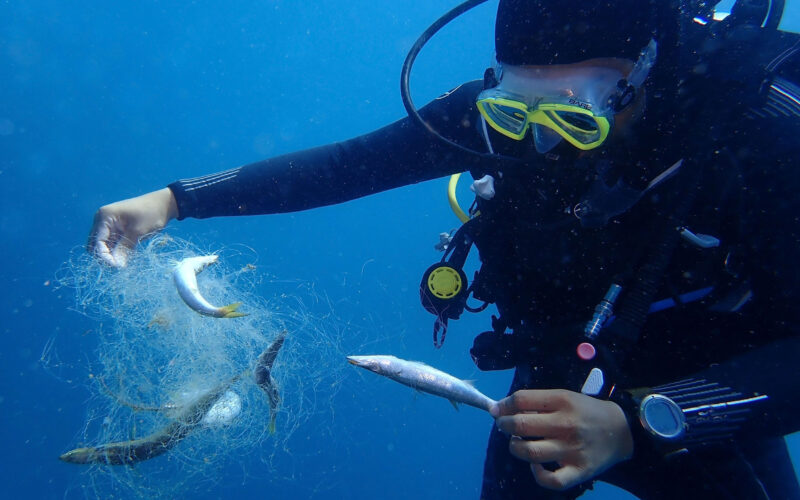
If there is one good thing about divers, it is that we are all ocean lovers, which means we tend to be nature lovers in general and want to live as sustainably and impact-free as possible.
Being a sustainable diver, whether you freedive or scuba dive, is all about being conscious of your environmental impact and taking steps to reduce it. This means being aware of how your actions affect the ocean and its inhabitants and taking measures to minimize them. As a sustainable diver, you can help protect the ocean by using gear that is designed to be environmentally friendly, avoiding touching or disturbing marine life, and disposing of waste properly.
Take a look at these 9 tips to becoming a more sustainable diver:
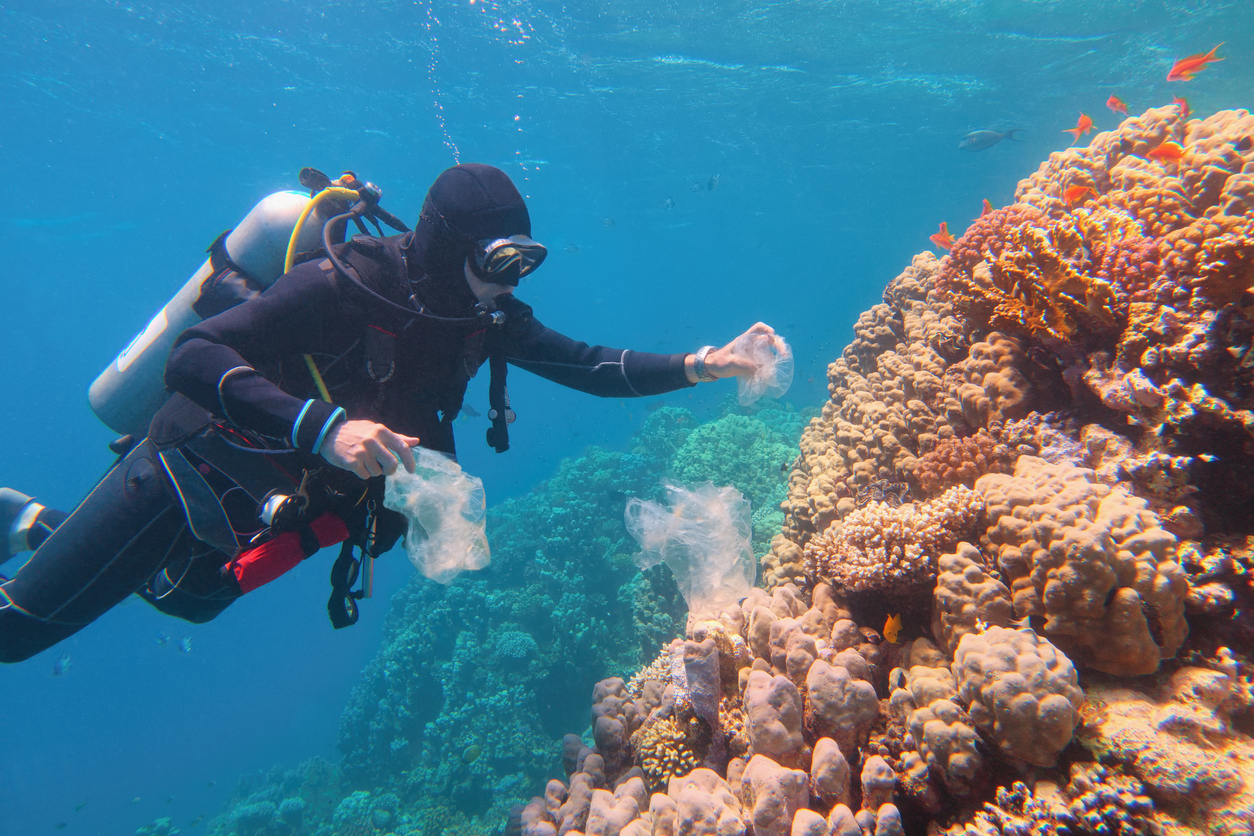
Take that Trash – Dive, Collect, Protect
Whether it means taking small pieces of trash that you find in the ocean while on a dive,
underwater or at the surface, or simply taking packaging and single-use plastic items that you bring with you to a diving destination back home with you where it is easier to dispose of correctly or recycle to ensure that it doesn’t end up in the ocean.
Take a diving knife or cutting tool with you on each dive along with a net trash bag, so you are prepared to help where you can. Remember, before taking trash with you, ask yourself these questions:
Has the Trash Already Adapted to the Marine Environment?
You may find, for example, that tin cans have rusted and become home to marine animals, whether corals, crabs or other crustaceans. Or an old fishing line has become so overgrown by corals that you would be removing and damaging more life than saving any.
Can I Remove It Without Causing Myself Harm?
As much as we want to do good, no trash is worth risking your own life over, whether it be at risk of cutting yourself or receiving stings or bites due to trying to assist a marine animal. Another important point is to monitor your gas consumption, as you may become so engrossed in the task of removing the trash that you don’t check as much as you should and lose track of time.
1. Will Removing the Trash from the Reef Cause More Harm to Marine Life than Good?
Removing trash from marine environments generally does more good than harm, but it requires careful consideration to avoid unintended negative impacts.
When trash is entangled in sensitive habitats like coral reefs, removal must be done with extreme caution. Damaging the reef can have long-lasting detrimental effects on the ecosystem. In some instances, leaving certain debris, like aluminum cans that will corrode and decompose within a few years, may be less harmful than attempting removal, especially if the debris has become integrated into the reef structure.
Balancing the immediate risks of removal with the long-term benefits of a cleaner environment is essential. Preventative measures, such as raising awareness about marine pollution and supporting regulations to reduce waste, are equally important. Ultimately, while our intentions to clean up are good, the methods must be carefully chosen to ensure that we do not inadvertently cause more harm than good.
2. Limit Your New Purchases and Support Eco-friendly Brands
The best way to reduce your footprint on earth is to not buy things you don’t need and to make sure you use clothing and/or diving gear until it is not safely usable anymore. Don’t replace things just because you want something new. Whatever you buy, try to research sustainable clothing and diving gear brands that offer products that have been produced sustainably, possibly using recycled materials. Many diving equipment brands also offer eco friendly packaging and reduce packaging waste by only using what is needed. With a bit of research, you can ensure to support the right companies.
3. Perfect your Buoyancy
One of the best ways to care for the reef or underwater world is to make sure that you have your buoyancy skills up to scratch, and dive within your ability. If you know your buoyancy isn’t the best, allow more distance between yourself and the reef.
Did you know, good buoyancy training starts with the right amount of weights.
For more information on why buoyancy is so important read our blog: The Importance of Good Buoyancy
4. Do Not Feed the Marine Life
It may be tempting to take some leftover bread with you snorkeling or on a dive to attract the fish and get to see them even closer. Think about it, you are not the only one that is doing this and in certain locations, especially where there is a lot of tourism, this can seriously disrupt the ecosystem. Causing fish not to feed off the algae covering corals or other marine life they might otherwise eat and keep in check.
5. Research Your Sunscreen
It is easier said than done, but try to make sure that your sunscreen is reef safe. Unfortunately you can’t blindly trust the reef safe label. Many of these labels are awarded to brands that have removed the most common ingredients known to harm the reef, such as octinoxate, oxybenzone, or 4-MBC. The term “reef-safe” is not regulated and therefore companies can freely label their products as such.
There are still many other ingredients in sunscreens that can harm the environment (and yourselves) and the best way to make sure you have a true reef safe sunscreen is to stick to mineral based sunscreens with zinc oxide or titanium oxide, labeled as “non-nano” which means the particles are too large to be ingested by coral. Another good tip is to use a rub-on lotion, sprays can easily land elsewhere on the beach or in the water rather than on your skin.
For more information, check out our blog post: Plastic Free and Reef Safe Sunscreens – Do They Exist?
6. Support An Eco-friendly Dive Shop
Again, it isn’t always easy to know which centers are more eco-conscious than others, but you can look out for eco awards from the corresponding training agencies, as well as find out if they support organizations such as Green Fins and conduct their dives by sticking to Green Fins guidelines.
Read reviews and see if there is any information about the dive center’s conduct there, check their social media to see if they participate in beach or underwater clean ups, do they keep group sizes small and ensure that marine life gets treated with respect. If you happen to dive with a group that touches or harms marine life, make sure you speak to the center manager about it afterwards and explain your decision to not dive with them again.
7. Avoid Supporting the Sale of Marine Life
Especially for us divers, this is quite an obvious one, but be sure to educate those around you or traveling with you. Shells might make nice necklaces and a nice souvenir, but many shells are taken from the sea bed, from live animals and the removal of shells can be destructive, additionally, marine animals need the shells for shelter or to live in. Other things to avoid buying are sea urchins, dried seahorses, broken coral, live tropical fish, etc most of which have been obtained illegally and are often not legal to bring back into your home country.
8. Reduce Your Seafood Intake
Quite the controversial topic, especially amongst divers, but in order to become more sustainable, it is essential that we reduce our consumption of seafood. Seafood consumption has been steadily increasing over the past few decades, and it is having a detrimental effect on our marine ecosystems. As consumers, it is important that we take responsibility for the damage that our consumption habits are causing and make efforts to reduce our seafood consumption in order to become more sustainable. By reducing our seafood intake, we can help protect ocean habitats, reduce overfishing and support sustainable fishing practices. We can also help preserve endangered species and ensure that future generations will still have access to healthy oceans and plentiful seafood sources.
9. Reduce your Carbon Footprint
As divers and travelers, we are probably frowned upon by the true eco warriors who have given up travel to save the planet. Giving up travel completely is an option, albeit perhaps extreme, but there are other ways that we can at least do our bit. Let’s face it, if we weren’t divers we wouldn’t be aware of the problems the ocean is facing and we wouldn’t be so passionate about doing something about it. Supporting the right businesses in the diving industry has lots of positives to outway the perhaps negative carbon impact. What we can do to improve and reduce our carbon footprint is to dive locally, as much as possible, travel less and when you do travel, stay longer to make the journey there more worthwhile and choose the most environmentally friendly way to travel. Opt to offset your carbon footprint when booking flights, many airlines now offer this or you can do so independently through many organizations.
For more information on this topic, check out Divers: How to Become a Responsible Traveler
By following these practices, you can help ensure that future generations will be able to enjoy the beauty of the underwater world just as we do today.