

Introduction
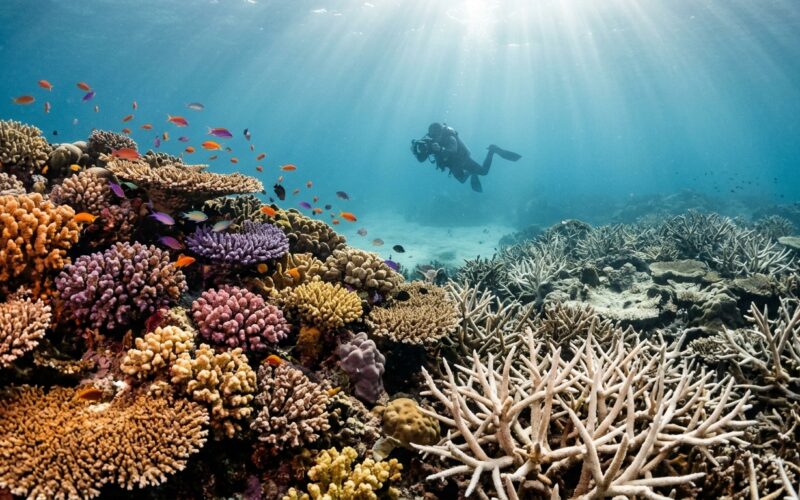
If you’ve been diving for a few years, you’ve likely experienced this shift firsthand. A reef that once burst with color now looks patchy. A favorite site feels quieter. Conditions you relied on seem less predictable. Understanding how climate change is affecting dive sites is no longer abstract – it is something divers experience on every descent.
This is not about alarm, it is about awareness. The more we understand what is happening beneath the surface, the better equipped we are to adapt, protect, and continue diving responsibly in a changing ocean.
Let us take a closer look at what is happening out there.
1. Coral Bleaching Is Becoming More Frequent
Coral reefs are highly sensitive to temperature changes. Even an increase of just 1–2°C above normal can stress corals, causing them to expel the symbiotic algae that give them color and energy. What remains is the pale, ghostly white structure known as bleached coral.
Bleaching events used to be occasional. Now they are happening more often – and in some regions, before reefs have had time to recover. Three destinations that have been hit especially hard illustrate just how serious the situation has become:
- The Great Barrier Reef, Australia – The world’s largest coral reef system has experienced five mass bleaching events since 1998, with the most severe occurring in 2016, 2017, 2020, 2022, and again in 2024 during the record-breaking El Niño-driven marine heatwave. The 2016 event alone killed roughly 50% of shallow-water corals in the northern sections of the reef.
- The Maldives – The 1998 El Niño bleaching event destroyed up to 90% of corals in some atolls. Repeated bleaching in 2016 and 2019–2020 has made full recovery extremely difficult, threatening one of the world’s most celebrated dive destinations.
- The Florida Reef Tract, USA – In the summer of 2023, sea surface temperatures in the Florida Keys exceeded 38°C – higher than a hot tub – triggering catastrophic bleaching across the entire reef system. Scientists described it as an “unprecedented mortality event,” with some sites losing the majority of their living coral cover in a matter of weeks.
These are not isolated incidents. The 2023–2024 El Niño event triggered the fourth global mass coral bleaching event on record, affecting reefs across the Atlantic, Pacific, and Indian Oceans simultaneously. For divers, this means less vibrant scenery and, more importantly, a rapid decline in the ecosystems that hundreds of species depend on.
2. Marine Life Is Shifting in Unexpected Ways
As ocean temperatures change, marine species are moving. Some head toward cooler waters, while others expand into new territories. This affects what divers can expect to see at familiar sites.
You might encounter species that were once rare in a region, or notice the absence of animals that used to be reliable sightings. Predator-prey relationships also shift, which can change the dynamics of entire dive ecosystems.
While novelty can be exciting, it often signals broader disruption beneath the surface.
3. Stronger Storms Are Reshaping Reefs
Climate change is linked to more intense storms in many parts of the world. These storms can physically damage reefs, breaking coral structures that took decades or even centuries to grow.
After a major storm, dive sites can look dramatically different. Large coral heads may be overturned, sandy bottoms can shift, and visibility may temporarily decline.
Some reefs recover over time, but repeated storm impacts make recovery slower and less certain.
4. Ocean Acidification Is Weakening Coral Growth
The ocean absorbs a significant portion of the carbon dioxide in the atmosphere. As CO² levels rise, seawater becomes more acidic, which affects the ability of corals and other marine organisms to build calcium carbonate skeletons.
This process is less visible than bleaching, but just as important. Weaker coral structures mean reefs become more fragile and less resilient to damage.
Over time, this can lead to flatter, less complex reefs that support fewer species.
5. Visibility and Conditions Are Becoming Less Predictable
Changing weather patterns and increased runoff from heavier rainfall can affect visibility and water quality at many dive sites. Sediment, pollutants, and nutrient runoff can cloud the water and alter marine ecosystems.
Divers may find that conditions vary more from season to season than they did before. Sites known for crystal-clear water may occasionally offer reduced visibility, even during traditionally reliable months.
This unpredictability makes planning dive trips more challenging, especially for travel-focused divers.
6. Coral Diseases Are on the Rise
Warmer waters do not just stress corals – they also make them more vulnerable to disease. Coral diseases can spread quickly across reefs, leaving behind large sections of dead or damaged coral.
Unlike bleaching, which corals can sometimes recover from, diseases often result in permanent loss. Entire reef sections can be affected in a relatively short time.
For divers, this can mean returning to a site and finding it dramatically changed from one year to the next.
7. Mangroves and Seagrass Meadows Are Declining
While coral reefs often get the spotlight, mangroves and seagrass beds are just as important. These ecosystems act as nurseries for many species and help stabilize coastlines.
Climate change, combined with coastal development, is putting pressure on these habitats. Their loss reduces biodiversity and affects the overall health of nearby reefs.
Divers may not always see these environments directly, but their decline impacts what we see underwater.
8. Dive Seasons Are Shifting
Traditional dive seasons are becoming less predictable in some regions. Warmer waters, changing currents, and shifting weather patterns can alter when conditions are at their best.
A destination that used to have a clear high season might now experience more variability. This affects trip planning, especially for divers traveling long distances.
Staying flexible and doing up-to-date research is becoming increasingly important when choosing when to travel.
9. Healthy Dive Sites Are Under Increasing Pressure
As some reefs decline, divers and operators often concentrate on remaining healthy sites. This can lead to overcrowding and increased pressure on already stressed ecosystems.
Popular sites may experience more boat traffic, more divers, and greater environmental strain. Without careful management, even resilient reefs can degrade over time.
Choosing responsible operators and practicing good buoyancy and awareness makes a real difference here.
10. Divers Are Becoming Part of the Solution
There is a positive side to this story. Divers are among the most engaged ocean advocates. Many participate in reef monitoring, citizen science, and conservation initiatives.
Simple choices – like reef-safe sunscreen, excellent buoyancy control, and supporting eco-conscious dive operations – all add up. Education is growing, and awareness within the dive community is stronger than ever.
Understanding how climate change is affecting dive sites helps divers make better decisions and contribute to preserving the places they love.
DiveAssure and Ocean Protection: The EcoBuddies Program
At DiveAssure, we believe that protecting divers and protecting the ocean go hand in hand. That is why we are proud supporters of the EcoBuddies program – an initiative dedicated to marine conservation, reef restoration, and ocean education.
Through EcoBuddies, DiveAssure contributes to real, on-the-ground efforts that help preserve the dive sites our members love. Because great dive coverage should do more than protect your trip – it should help protect the ocean you dive into.
When you dive with DiveAssure, you are part of something bigger.
11. Planning Ahead Matters More Than Ever
With changing conditions, trip planning now involves more variables than just weather and season. Flexibility, backup plans, and proper preparation can make the difference between a stressful trip and an incredible one.
This also includes thinking about travel protection. Unexpected changes – whether environmental or logistical – can disrupt even well-planned dive trips.
Having reliable support through a global membership like DiveAssure dive and travel coverage means you can focus on the experience, not the uncertainties.
12. Diving with Awareness Changes the Experience
When you understand what is happening beneath the surface, every dive takes on a deeper meaning. You start to notice subtle changes, appreciate healthy reefs more, and dive more mindfully.
It is not about losing the joy of diving – it is about adding perspective. The ocean is still full of incredible beauty, and those moments are just as powerful as ever.
Being aware simply makes us better divers and better stewards of the underwater world.
Summary
How climate change is affecting dive sites includes warmer waters, coral bleaching, stronger storms, and shifting marine life – with iconic reefs like the Great Barrier Reef, the Maldives, and Florida’s reef tract already experiencing devastating losses. These changes impact visibility, biodiversity, and reef health. Divers can adapt by choosing responsible operators, adjusting timing, and supporting conservation. DiveAssure helps protect your travel investment and, through the EcoBuddies program, actively contributes to protecting the marine environment – so you can keep exploring with confidence and conscience.