


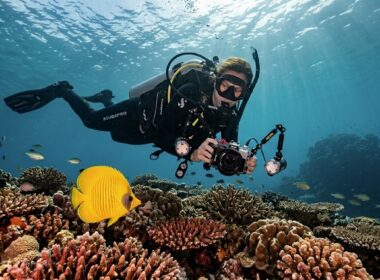



The day you’ve been waiting for since booking your dive trip has finally arrived! You are about to embark on the diving trip of a lifetime to a remote island in Asia. When you arrive, you settle into your room and prepare for the first day of diving. You head to the dive center to check in and inspect your equipment. You know you serviced everything before coming, so you know that all your gear is in good working order. Or is it? There are many steps you can take towards diving emergency preparedness, let’s take a look.
The Excitement and Risks – Diving Safety Tips
Once on the boat, you set up your gear. Then, you sit down and enjoy the ride to the dive site, confident that everything is in order. After you gear up and do your buddy checks, you jump into the water and begin the descent with your dive guide and buddies.
Once underwater, you hear a funny noise behind your head. You look around, but you can’t see anything. You check your gauges and notice that you have already used a significant amount of air. What’s going on? You feel a tap on your shoulder, and one of your dive buddies is trying to communicate with you. Something isn’t right, so you ascend. The dive guide notices, and you all come up from the dive. It turns out that the freshly serviced regulator had a hose that wasn’t tightened enough, causing it to leak heavily.
The above situation is actually a common issue right after a regulator service and something that, over the past 15 years working as a diving instructor, I have witnessed on multiple occasions with “freshly serviced ” gear. This is why I would always suggest a check dive from the shore for anyone that has not used their gear since having it serviced.
Situations like this happen more often than you’d like, so it’s important to be prepared for a diving emergency no matter where or when it happens. That’s diving emergency preparedness.
It is vital for divers to be prepared for emergencies. This ensures their safety and allows them to respond effectively to any unexpected situations that may arise underwater. It is essential to respond rapidly to emergencies, such as equipment failures or health issues, to prevent minor problems from becoming major incidents. Being prepared is the key to reducing anxiety and building confidence. It helps divers respond calmly and safely, rather than panicking, which can be dangerous.
Preparedness also enhances group safety, allowing divers to assist their buddies or team members if needed. It fosters trust and cohesion within the group, ensuring a unified response to emergencies. Furthermore, being prepared for the unexpected, such as changing currents or sudden health issues, allows divers to adapt safely to their environment.
Furthermore, divers have a legal and ethical obligation to dive safely, protecting themselves, others and the marine environment. Proper emergency preparedness is in line with the standards set by diving agencies, and is the only way to ensure responsible diving practices. In summary, there is no doubt that investing in emergency preparedness not only safeguards lives but also enhances the overall safety and enjoyment of diving experiences.
For comprehensive dive safety, choose DiveAssure, the leading provider of dive insurance and emergency support. DiveAssure offers comprehensive coverage for dive-related accidents, medical emergencies, and evacuation services. With 24/7 global assistance, you’re protected and supported, so you can dive confidently and focus on the adventure.
Understanding the Risks of Diving
Both scuba diving and freediving are sports that carry inherent risks. You submit your body to higher ambient pressures than it is used to. While there are relatively few accidents compared to other sports, if an accident does occur, it can be serious and needs to be treated with urgency.
Diving is an exhilarating activity, but it also carries significant physical dangers. One of the most significant risks is decompression sickness, also known as “the bends”. This occurs when divers ascend too quickly, causing nitrogen bubbles to form in the bloodstream and tissues. This can and will lead to severe pain, paralysis, or even death. Barotrauma is another risk. Pressure changes damage the lungs, ears, or sinuses.
Furthermore, deep-water diving can result in nitrogen narcosis, impairing judgement and motor skills and potentially leading to accidents. Lastly, there is the ever-present danger of drowning, especially in strong currents or if equipment malfunctions. Proper training and adherence to safety protocols are the only ways to mitigate these risks.
Environmental hazards underwater
It is crucial to be aware of the various environmental hazards that can endanger divers in underwater environments. Strong currents and sudden changes in water temperature will disorient and exhaust divers, making it difficult for them to navigate or maintain buoyancy. Visibility is reduced by murky water or suspended particles, increasing the risk of collisions with underwater structures or marine life.
Certain marine organisms, such as jellyfish, venomous fish and corals, can cause painful stings, infections or allergic reactions. In confined spaces like caves or wrecks, silting will quickly reduce visibility to near zero, creating a hazardous environment. It is crucial to be aware and prepared to manage these environmental threats while diving.
Health Emergencies in Diving
The most common emergencies are barotraumas, especially for beginner divers, an ear or sinus barotrauma can be a common occurrence, due to improper equalisation. Another, luckily not so common, issue is decompression sickness (DCS), which can cause severe joint pain, dizziness, and even paralysis if not treated promptly. Other less common risks include pulmonary barotrauma, where expanding air during ascent damages the lungs, potentially leading to air embolism – a life-threatening condition where air bubbles enter the bloodstream, hypothermia in cold waters, which impairs motor functions and judgment and oxygen toxicity, particularly in deep dives which can cause seizures. It is therefore essential to be able to recognise these risks quickly and to respond appropriately.
The Role of DiveAssure in Emergency Preparedness
DiveAssure is a specialist insurance provider, dedicated to meeting the specific requirements of divers. DiveAssure offers comprehensive coverage tailored specifically for the diving community, based on a deep understanding of the risks associated with diving. DiveAssure offers peace of mind to both recreational and professional divers through its global network of support, ensuring that assistance is available whenever and wherever it is needed. The company’s dedication to the diving community is demonstrated by its dedication to offering not just insurance, but also resources and education to promote safer diving practices.
Coverage Details: What DiveAssure Offers
DiveAssure’s coverage plans are designed to address the full spectrum of risks faced by divers. Their policies include coverage for emergency medical expenses, hyperbaric chamber treatments and evacuation costs, ensuring that divers receive prompt and effective care in the event of an accident. Furthermore, DiveAssure provides trip cancellation and interruption coverage, as well as equipment insurance, offering divers protection from financial losses due to unforeseen circumstances. DiveAssure’s distinctive offering is its unlimited coverage for diving-related injuries. This eliminates the need for divers to concern themselves with benefit caps in critical situations.
Why DiveAssure Stands Out in the Market
DiveAssure differentiates itself in the market through its specialised focus on diving and unparalleled commitment to customer care. DiveAssure’s plans are designed with the specific needs of divers in mind, offering comprehensive and often unlimited coverage for dive-related incidents, which sets it apart from general travel insurance providers. Their 24/7 emergency hotline connects divers with medical professionals who possess the requisite knowledge and expertise to provide advice and assistance in a prompt and appropriate manner in the event of a diving-related injury.
DiveAssure’s partnership with leading hyperbaric facilities and global evacuation services strengthens its position as a leading provider of dive insurance, making it the preferred choice for divers who prioritise safety and reliability.
For Key features and benefits of DiveAssure coverage see our post: Dive Insurance, do we need it?
How to Get Started with DiveAssure
Steps to Sign Up for DiveAssure Coverage:
Getting started with DiveAssure is a straightforward process designed to ensure divers can quickly access the protection they need. First, visit the DiveAssure website, get a quote for the plan you are interested and click through the simple steps to purchase a plan. Your coverage will be active immediately, or from the date that you have selected, allowing you to dive with confidence knowing that you’re fully protected.
Tips for Choosing the Right Plan
Choosing the right DiveAssure plan involves considering your diving habits and travel needs. For recreational divers who mostly dive locally, already have a comprehensive travel plan, or don’t tend to plan and pay their trips up front, our diving accident plan will cover your needs, with emergency medical expenses, emergency evacuation/repatriation, accidental death and dismemberment and much more. However, if you frequently travel abroad, require a policy to cover your trip for cancellation, lost luggage, lost equipment, missed connections, and plan to dive on your some of your trips, consider our comprehensive travel plans.
It’s always wise to evaluate whether you need single-trip or annual coverage based on how often you dive. Reading through the policy details and understanding the coverage limits can help ensure you select a plan that offers the best protection for your specific diving activities.
Conclusion
Emergency preparedness is a fundamental part of safe diving. By investing time in training, planning, and practicing emergency procedures, you can dive with confidence, knowing you are ready to handle the unexpected. Remember, preparedness not only protects your life but also contributes to the overall safety and enjoyment of your diving experiences.