




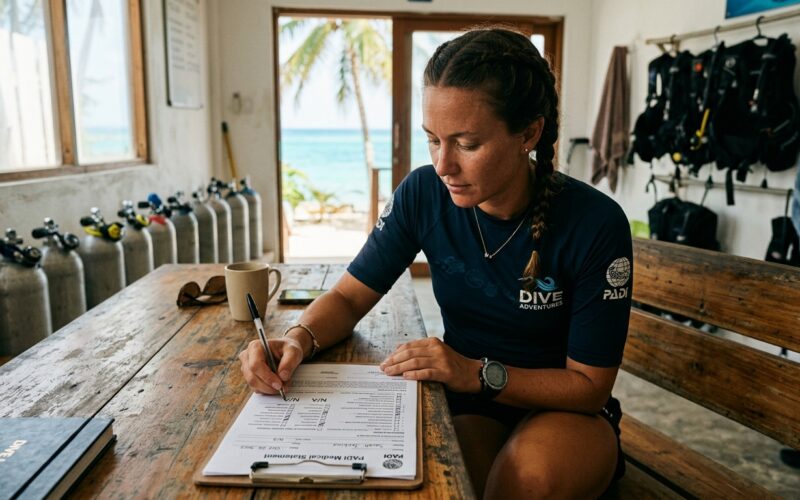
Almost every diver has been there. You arrive at the dive center, jet lagged, excited, already picturing the reef. Someone hands you a clipboard with a pre-dive medical questionnaire and a pen that barely works. It is tempting to tick “no” down the whole column and move on to the fun part.
We understand the impulse. We have felt it too. But that form is one of the most important documents you will ever sign as a diver. It exists because pressure, immersion, and breathing compressed gas do strange things to the human body, and some medical conditions turn a routine dive into an emergency very quickly.
Below are ten honest reasons to treat the pre-dive medical questionnaire with the respect it deserves, and how to handle it if you are unsure about a “yes.”
1. The form exists because divers have died from things they hid
The RSTC and equivalent medical statements were not written by lawyers looking for excuses. They were shaped over decades by dive medicine specialists reviewing real fatalities and near misses. Cardiac events, undisclosed asthma, seizure disorders, and certain medications show up again and again in incident reports.
The questions on the form are specific because the risks are specific. A heart condition that is manageable on land can become fatal at 25 meters. Being honest is not paranoia. It is pattern recognition.
2. Ticking “yes” rarely means you cannot dive
This is the most misunderstood part of the whole process. A “yes” answer does not end your trip. It simply routes you to a physician who understands diving, usually via a short consultation and a signed clearance.
Most conditions, controlled asthma, well managed blood pressure, past surgeries, ADHD medications, mild anxiety, and many others, are compatible with diving once a doctor confirms your fitness. Divers with far more significant challenges dive successfully every day. Our friends at the community wrote a whole piece about diving Socorro in a wheelchair, which is a good reminder that the sport is more inclusive than the paperwork sometimes feels.
3. Instructors are not doctors, but they are pattern readers
A good instructor is not trying to catch you out. They are looking for combinations that concern them: a new decongestant plus a history of ear surgery, a beta blocker paired with a first ocean dive, a recent chest infection you shrugged off.
When you disclose these things, the instructor can adjust the plan. Maybe a shallower profile. Maybe a private guide. Maybe a rest day and a doctor visit before you get wet. That flexibility disappears the moment you lie.
4. Your insurance and membership depend on it
Here is the part divers rarely think about until it is too late. Every dive accident policy, including ours, is built on the assumption that you answered your medical questionnaire truthfully. If you concealed a known condition and that condition contributes to an incident, a claim can be reduced or declined.
We do not say this to scare anyone. We say it because we have seen the aftermath. A chamber ride, an air ambulance, and a hospital stay can run into six figures. Nobody wants to discover a coverage gap from a hospital bed. If you want to understand how much protection matters when things go wrong, the story of a diver saved by diving accident insurance puts it in real terms. Answer the form honestly and our coverage does what it is designed to do.
5. Pressure changes the rules for medications
Plenty of everyday medications behave differently at depth. Pseudoephedrine can wear off mid dive and cause a reverse block on ascent. Some antihistamines increase drowsiness with nitrogen narcosis. Certain antidepressants can lower the seizure threshold when combined with high partial pressures of oxygen.
None of this means you cannot dive on medication. It means the doctor needs to know what you take, at what dose, and how recently you started it. That conversation only happens if the form is honest.
6. Recent illness is not the flex you think it is
Diving through a “small cold” is one of the most common ways to end up with a squeeze, a burst eardrum, or a lung injury. Congestion blocks equalisation. Recent chest infections leave pockets of trapped air that expand on ascent.
The questionnaire asks about recent respiratory illness for a reason. If you have been coughing this week, say so. Losing a day of diving is a small price. Losing your hearing, or worse, is not.
7. Mental health belongs on the form too
This is often the section divers skip. Anxiety, panic disorders, and certain psychiatric medications are relevant to diving safety, not because divers with these conditions cannot dive, but because the underwater environment can amplify symptoms if the plan is wrong.
Panic underwater is one of the leading causes of drowning in otherwise fit divers. If you have a history of anxiety or panic, telling your instructor allows for a slower descent, closer buddy contact, and better briefings. We wrote more about this in our piece on pre-dive anxiety, fears, and coping, and it is worth a read whether you are new or experienced.
8. Age and cardiovascular health deserve special attention
Cardiac events are consistently among the leading causes of dive fatalities, particularly in divers over 45. The medical form asks about blood pressure, cholesterol, chest pain, and family history because these are the exact risk factors that matter.
A cardiovascular check up before a big dive trip is not overkill. It is the same logic as servicing your regulator before a liveaboard. You would not skip the regulator service. Do not skip the body service either.
9. Honesty protects your buddy and your crew
Diving is a team activity. If something happens to you underwater, your buddy, your guide, and the boat crew are the ones dealing with it. They deserve to know what they might be dealing with.
A concealed seizure disorder means a rescuer can perform CPR on a diver they thought was drowning, when the real problem was something else entirely. A hidden heart condition changes the entire emergency response. Emergency preparedness works best when everyone has accurate information, which is exactly why diving emergency preparedness starts long before you hit the water.
10. If a dive center never asks, that is a warning sign
Somewhere in the world, right now, a shop is skipping the medical form to keep customers happy. That is not a favor to you. It is a red flag about how they handle everything else, from equipment maintenance to emergency response.
A dive center that takes the questionnaire seriously is a dive center that takes you seriously. If you ever want a quick checklist, the piece on 10 signs of an unsafe dive center is a useful gut check before you hand over your credit card.
Bonus tip: Get your coverage sorted before the form, not after
The best time to think about medical fitness and protection is before you leave home, not while jet lagged at a check in desk. A physician visit, a current dive medical, and a coverage plan that follows you globally make the whole trip smoother. Our membership is built for recreational, freediving, technical, and professional divers alike, so whatever your discipline, we have you covered. Get covered with DiveAssure here and dive with the confidence that the paperwork is already in order.
The bottom line
The pre-dive medical questionnaire is not a hurdle between you and the reef. It is a quiet conversation between you, the ocean, and the people who will help you if something goes wrong. Give it the ninety seconds of honesty it deserves. Your future self, and possibly your buddy, will be grateful.
Summary
A pre-dive medical questionnaire is the short health form you complete before diving. It flags conditions that can become dangerous underwater, such as heart issues, asthma, or certain medications. Answering honestly protects your safety, keeps your DiveAssure coverage valid, and helps instructors plan properly. If you tick yes to anything, a physician sign off usually resolves it. Honesty rarely stops you from diving. Lying can cost you the dive, your health, or your life.