

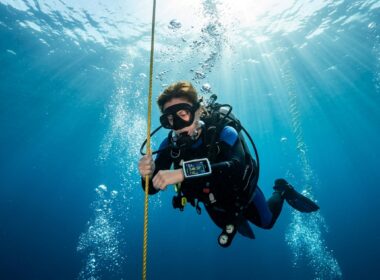




What changes, what does not, and how seasoned divers keep enjoying the ocean well into their seventies and beyond.
Introduction
Walk onto almost any dive boat in Bonaire, Komodo, or the Red Sea and you will spot them. The divers who move a little slower on the surface, take their time with the buddy check, and then glide through the water like they belong there, because they do. Diving after 60 is not a niche pursuit. It is one of the quietest success stories in our community, and many of the most thoughtful divers you will ever meet are well past retirement age.
Still, the question deserves an honest answer. Is age just a number underwater, or does the body actually demand a different approach once you cross 60? The truth sits somewhere in between. Physiology changes. Recovery slows. Medications enter the picture. But none of that closes the door on diving. It just asks you to dive a little smarter, and that is something experienced divers tend to be very good at.
Here are the habits, mindset shifts, and practical decisions that help older divers keep enjoying the sport safely and joyfully. None of this is about giving anything up. It is about diving in a way that respects who you are now.
1. Get a proper dive medical, not a quick form check
The first habit that separates thriving senior divers from those who run into trouble is genuine medical honesty. A dive medical with a physician trained in hyperbaric or dive medicine is not the same as your annual checkup. They will look at your cardiovascular health, lung function, blood pressure stability, and any medications that may affect gas exchange or alertness underwater.
Cardiac events remain the leading cause of dive fatalities in older divers, and most are linked to underlying conditions that could have been flagged on shore. A thorough evaluation every year or two is not bureaucratic. It is the single highest value thing you can do for your future as a diver.
2. Build the cardiovascular base your dives quietly demand
Diving looks gentle. It is not, particularly when you factor in surface swims, current, gear weight on a rocking boat, and the occasional unplanned effort. The fitter your heart and lungs, the more reserve you have when something asks more of you than expected.
You do not need to train like an athlete. Brisk walking, swimming, cycling, or any activity that gets you genuinely out of breath for thirty minutes a few times a week makes a significant difference. Add some basic strength work for your legs and core, because hauling yourself up a ladder with a full tank is a real-world test you want to pass comfortably every time.
3. Respect the new conservative profile
Tissues absorb and release nitrogen a little differently as we age. Circulation patterns shift. None of this is dramatic, but it is real, and it is why most experienced older divers naturally gravitate toward more conservative profiles.
That can mean diving shallower, extending safety stops, adding deeper safety stops on multi-level dives, leaving more no-decompression time on the table, and skipping that fourth dive of the day even when everyone else is gearing up. Nitrox is often a smart choice here, used at air depths to add a buffer rather than to push limits. Conservative is not timid. It is the profile that lets you keep diving for another twenty years.
4. Stay current, even if you have thousands of dives
One of the most common patterns we see in incidents involving senior divers is a long gap between trips. Skills fade faster than memory admits, especially mask clearing under stress, controlled ascents, and air sharing. If you have not dived in a year or more, book a refresher. Not because you have forgotten how to dive, but because muscle memory and breathing rhythm need a tune-up before you find yourself thirty meters down trying to remember which way the inflator hose works.
This is also a great age to invest time in your buoyancy control. Better buoyancy means lower air consumption, less effort, and far less stress on your joints and lungs throughout the dive.
5. Reassess your gear, honestly
Gear that served you well at 40 may not be the right gear at 65. A heavy steel backplate, a stiff drysuit, or a regulator with higher breathing resistance can all quietly add to your workload. Consider lighter cylinders, a regulator known for easy breathing at depth, a BCD that fits your current body shape rather than the one you had a decade ago, and fins that match your current leg strength.
Drysuits are worth a special mention. They keep you warmer, and warmth is one of the most underrated factors in decompression safety. Getting cold during a dive increases decompression stress significantly, and older divers tend to feel cold sooner than they did in their thirties.
6. Take cold, current, and depth seriously
Three factors quietly raise the workload of any dive: cold water, current, and depth. Individually they are manageable. Stacked together, they can turn a routine dive into a hard one quickly. As we get older, our margin for absorbing that combination shrinks.
This is not a reason to avoid challenging diving. Plenty of divers in their sixties and seventies dive the Galapagos, Socorro, and northern wrecks with no issue. It is a reason to pick your battles. Choose one challenging variable at a time, dive with operators who run conservative profiles, and never let pride push you into a dive that your gut says is too much today.
7. Manage medications and hydration with intention
By 60, many divers are on at least one regular medication. Blood pressure medications, anticoagulants, beta blockers, and antihistamines can all affect how your body responds underwater. Some affect your heart rate response to exertion. Others affect alertness, hydration, or bleeding risk. None of this automatically rules out diving, but all of it deserves a conversation with a dive-aware physician.
Hydration is the other quiet factor. Dehydration is one of the most consistent contributors to decompression sickness, and older bodies dehydrate faster, especially in tropical destinations where the heat and humidity between dives is relentless. Drink more than you think you need, and lay off the alcohol the night before a diving day.
8. Listen to your sleep, stress, and travel fatigue
One of the gifts of experience is the ability to read your own state. Use it. If you slept badly, if your flight was brutal, if you are emotionally drained, your body will be working harder on every dive that day. Calling a dive is not a failure. It is one of the most experienced things a diver can do.
Plan your trips with this in mind. Arrive a day early to adjust. Avoid diving the morning after a long-haul flight. Build in rest days mid-trip. The divers who keep diving into their seventies and eighties are almost always the ones who treat rest as part of the plan, not as a sign of weakness. If pre-dive nerves creep in more often than they used to, that is worth acknowledging too, and our piece on pre-dive anxiety and how to work through it is a good place to start.
9. Dive with operators who actually understand older divers
Not every operator is built for this. Some run aggressive multi-dive days, fast descents, and minimal surface intervals. Others quietly accommodate divers who need an extra moment, a tank handed up the ladder, or a slightly shallower profile. The second kind is what you want.
Ask before you book. How long are the surface intervals. Are nitrox and conservative profiles encouraged. Will a divemaster guide a smaller, slower group if requested. Good operators welcome these questions. The ones who get impatient on the phone will be impatient on the boat.
10. Build emergency preparedness into every trip
Statistically, most dives end uneventfully. But when something does go wrong, the speed and quality of the response matter enormously, and that response depends on planning you did before you ever boarded the boat. Know where the nearest chamber is. Know how you would get there. Know who to call. Travel with a basic medical summary that lists your medications and conditions, in a language the local responders can read.
Our guide to diving emergency preparedness is worth a read before any trip, regardless of age. For older divers specifically, the value of being prepared is even higher, because the cost of delays in care tends to grow with age.
11. Get coverage that actually fits how you dive
This is the part many divers postpone, and it is one of the simplest things to take care of. Standard travel insurance frequently excludes diving, excludes hyperbaric treatment, or quietly caps coverage in ways you only discover when you need it. We built our membership at DiveAssure specifically for divers, including older divers, technical divers, and dive professionals, with no upper age cliff that suddenly shuts you out of the sport you love.
Coverage means a chamber ride that does not become a financial event. It means evacuation from a remote liveaboard. It means a trip you can actually relax into. You can read more about why dive-specific travel coverage matters, or head straight to our dive and travel protection plans to get covered here.
12. Keep diving with people, not just for the dives
The last tip is the one that keeps people in the sport longest. Diving after 60 is more rewarding when it is connected to a community. Dive clubs, regular buddies, shared trips, mentoring newer divers, contributing to citizen science projects. These are the threads that keep diving meaningful when the novelty of the first hundred dives is long behind you.
Many of the most inspiring divers we know are people who started later in life, came back to it after raising kids, or simply refused to let a number on a birthday card take something they love away from them. The ocean does not care about your date of birth.
Closing thoughts
So is age just a number underwater? Not entirely. The body changes, and pretending it does not is the riskier path. But with honest preparation, intelligent profiles, the right gear, and coverage that respects how you actually dive, there is no reason 60, 70, or even 80 should keep you out of the water. The ocean has been waiting patiently. Go meet it on your terms.
Topic tags: senior divers, dive safety, dive fitness, diver health
Summary
Diving after 60 is absolutely possible and is enjoyed by thousands of divers around the world. With a current dive medical, steady cardiovascular fitness, more conservative profiles, well-fitted gear, and honest attention to sleep, hydration, and medications, age becomes far less limiting than many assume. Older divers often bring patience, better air consumption, and stronger judgement to every dive. At DiveAssure, we support divers of every ability with coverage built around real diving needs, so you can keep exploring with confidence at any stage of life.
Note: Check the coverage description to see the maximum age limit for each particular coverage.