


Cenote diving in Mexico’s Yucatán Peninsula is unlike anything most divers experience in the ocean. You are not drifting over a reef or descending along a wall, instead you glide through ancient freshwater caverns carved into limestone, where sunlight filters through openings and everything feels still, almost untouched by time. For many divers, this is their first step into overhead environments, but without the intensity of full cave diving. If you are curious but unsure where to start, this guide walks you through what to expect, how to prepare, and how to make the most of your first cenote experience.
What Is Cenote Diving?
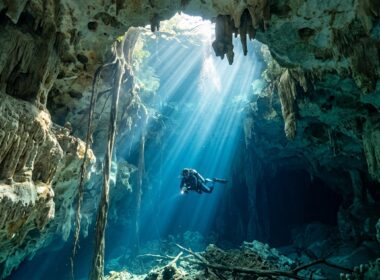
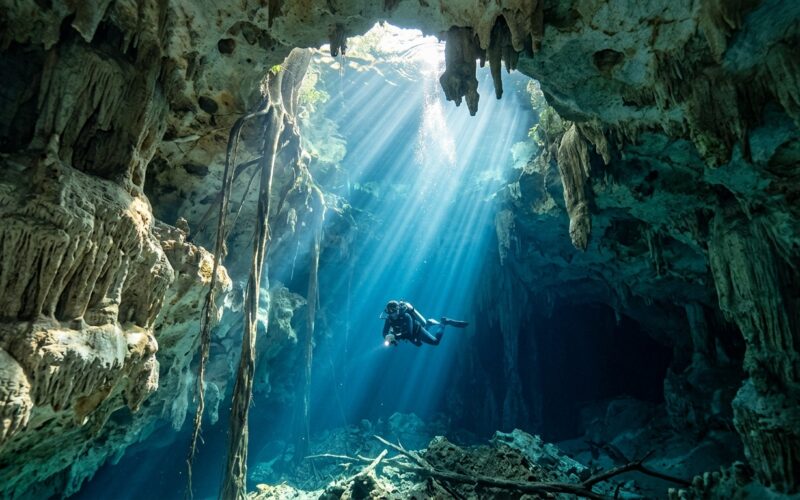
Cenotes are natural sinkholes formed when limestone bedrock collapses, revealing groundwater beneath. In the Yucatán Peninsula, these openings connect to one of the largest underground river systems in the world. When we talk about cenote dives for beginners, we are usually referring to cavern diving, not cave diving. The difference matters. In cavern diving, you always remain within sight of natural light and follow clearly defined guidelines set by certified guides. That means you get the surreal beauty of overhead environments without the technical demands of full cave diving. Typical features you will encounter include brilliant light beams shining through jungle openings, stalactites and stalagmites formed thousands of years ago, haloclines where fresh and salt water meet and create shimmering visual distortions, and exceptionally clear water, often with visibility beyond 50 meters / 160 feet.
Who Can Try Cenote Diving?
The good news is that cenote diving in Mexico’s Yucatán Peninsula is accessible to many certified divers. You do not need cavern or cave certification for beginner-friendly cenote dives. However, there are a few baseline requirements that matter more here than on a typical reef dive. Most operators require Open Water certification or higher, good buoyancy control, and a general comfort in calm, confined environments. If your buoyancy tends to fluctuate or you rely heavily on kicking to stay stable, it is worth practicing before you book a trip to a cenote. In a cenote, precise control makes all the difference. You do not need to be an advanced diver, but you do need to be attentive. These environments are peaceful but require awareness of your position, your guide, and your surroundings. The reward is an experience that feels deeply immersive, almost meditative.
Essential Gear for Cenote Diving
Dive centers in the region are well equipped, but understanding the purpose of your gear helps you dive more comfortably. Here is what matters most:
- Wetsuit: Cenote water stays around 24 to 26 degrees Celsius year round, which can feel cool over time, especially across multiple dives. A full 5mm wetsuit keeps you comfortable and reduces energy loss.
- Dive Lights: Even in cavern zones, there are darker sections where natural light fades. Your guide will carry a primary light and back-up light, and you should be provided with one as well, it is a good idea to check this with the dive center before booking. The beam reveals textures in the rock and enhances visibility in shaded areas, making the dive far more vivid.
- Streamlined Regulator and Buoyancy Setup: You want hoses neatly routed and nothing dangling that could disturb sediment or snag on formations. Most divers use standard open water configurations, but guides pay close attention to setup before entering the water.
- Fins with Controlled Technique: Power matters less than control here. Frog kicks or modified flutter kicks are preferred to avoid disturbing the fine silt on the cavern floor. Once silt is kicked up, it can reduce visibility quickly. A good finning technique keeps the water crystal clear for everyone.
What You Will Experience Underwater
The first descent into a cenote often feels surprising. Instead of waves or current, you enter glassy, still water shaded by jungle canopy. One of the most iconic features is the way sunlight penetrates the water, around midday, beams form visible columns that shift as you move through them, changing with the time of day, the weather, and even your angle in the water. At certain depths, you may encounter haloclines where freshwater mixes with saltwater, creating a shimmering, distorted effect almost like heat waves underwater. Swimming through one feels like briefly entering another dimension before clarity returns. Unlike ocean diving, there is no surge or current, the environment is calm, quiet, and deeply still. Your breathing becomes more noticeable, and many divers find the experience unexpectedly grounding.
Safety Considerations in Cenotes
Diving in overhead environments always requires respect. While beginner cenote dives are guided and controlled, safety practices are taken seriously. Permanent guidelines run through cavern routes and your guide will lead throughout the dive. You should remain close enough to maintain clear visibility at all times. Good buoyancy protects both you and the environment, as disturbed sediment can impact visibility for the whole group. Conservative air rules are also followed in cenote diving, and your guide will explain the turn pressures and exit strategy before the dive. Having the right travel coverage adds another layer of confidence here. When we dive in environments like these, knowing we are backed by reliable dive and travel protection lets us focus fully on the experience rather than the what-ifs.
Best Time to Go
You can dive the cenotes all year round, which is part of what makes the Yucatán Peninsula so appealing. Visibility remains consistently excellent regardless of season, rain can affect surface conditions slightly, but underground systems stay remarkably stable. If you want to see the most dramatic light beams, plan dives between late morning and early afternoon when sunlight is strongest overhead.
Packing Tips and Preparation
Preparing for cenote diving is less about specialized gear and more about dialing in the basics. If it has been a while since your last dive, consider doing a refresher dive. Comfort and control will make your cenote experience far more enjoyable. Bring a mask you already trust and fit well, as these are environments where you want to stay focused and relaxed, and trying new gear for the first time in a cenote is not a good idea. Even in tropical climates, multiple freshwater dives can cool you down, so a towel and dry clothing between dives go a long way. Trips to the Yucatán often combine cenotes with reefs, caves, and travel between locations, so we always recommend having comprehensive coverage in place so your plans stay uninterrupted, whether you are diving, traveling, or both.
Need coverage for your upcoming trip? Get covered here.
Conclusion
Cenote diving offers a completely different perspective on what diving can feel like. It is quieter, more focused, and visually unforgettable in a way that photos rarely capture. For beginners, it is also an accessible introduction to overhead environments: guided, structured, and deeply rewarding when approached with the right mindset. Take your time, refine your buoyancy, and trust the process. The result is a dive that stays with you long after you surface.
Happy diving, and may your next adventure be your best one yet!
Summary
Cenote diving in Mexico’s Yucatán Peninsula offers clear freshwater caverns, light effects, and unique geological formations. Beginners can safely explore cenotes with proper guidance, solid buoyancy skills, and certified guides. We support divers with global coverage so you can focus on the experience instead of logistics. With preparation and the right mindset, cenote diving becomes one of the most memorable underwater adventures you can have.